
Ghee guides4 min read
Ghee vs Butter: What Is the Difference?
Ghee and butter both come from milk fat, but they are not the same. How each is made, how they cook, how they keep, and when to reach for which.
- Written by
- Snehprabha Foods Co.
- Published
- Last updated
- Length
- 947 words
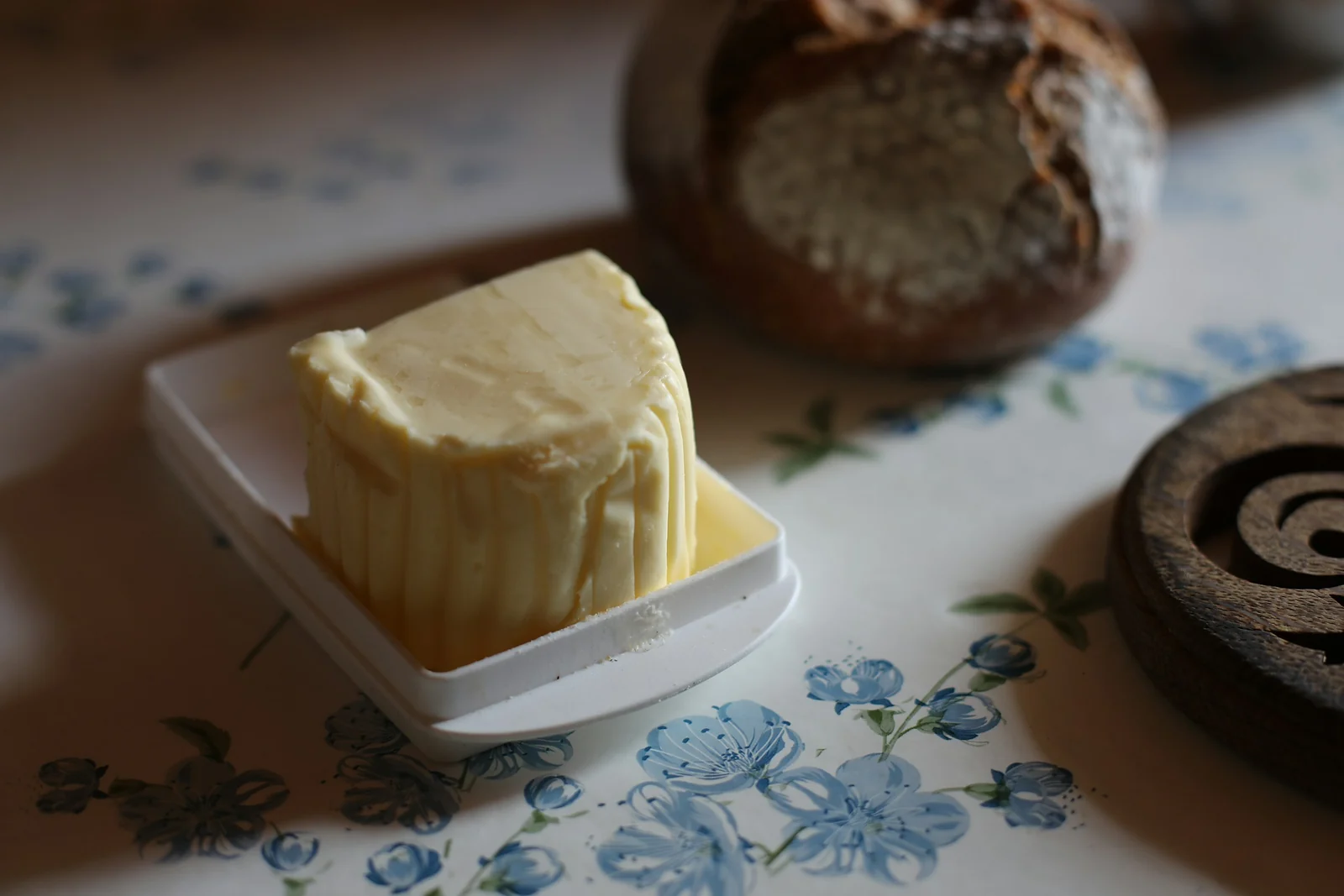
Ghee and butter come from the same place, which is milk fat, and they are often swapped in recipes. They are still different foods. They are made differently, they behave differently in a pan, and they are stored differently. Here is how they compare, without the hype in either direction.
How butter and ghee are made
Butter is made by churning cream, or in traditional Indian kitchens, curd, until the fat gathers together and separates from the liquid. What is left is a mixture. Butter is typically around 80 percent milk fat, and most of the rest is water, with a little milk solids.
Ghee starts one step later. Butter, or cream or curd that has been turned into butter, is heated slowly until the water cooks off and the milk solids separate. Those solids are strained out, and what remains is almost entirely fat. Cooking until the solids brown a little gives ghee its nutty, toasted smell.
Ghee and butter side by side
| Compared on | Butter | Ghee |
|---|---|---|
| What it is | Churned cream or curd | Butter cooked until the water is gone and the solids are strained out |
| Water | Some, usually under a fifth of the weight | Almost none |
| Milk solids | Present | Removed |
| Texture | Soft and spreadable when cool | Liquid when warm, soft or grainy when set |
| Flavour | Mild and creamy | Rich and nutty |
| In a hot pan | The milk solids brown and burn quickly | Tolerates higher heat before it smokes |
| Storage | Usually kept in the refrigerator | Kept in a cool, dry cupboard if the label says so |
The last two rows come from the same cause. Butter still contains water and milk solids, and those are the parts that burn first and spoil first. Ghee has had both taken out.
Which one to cook with
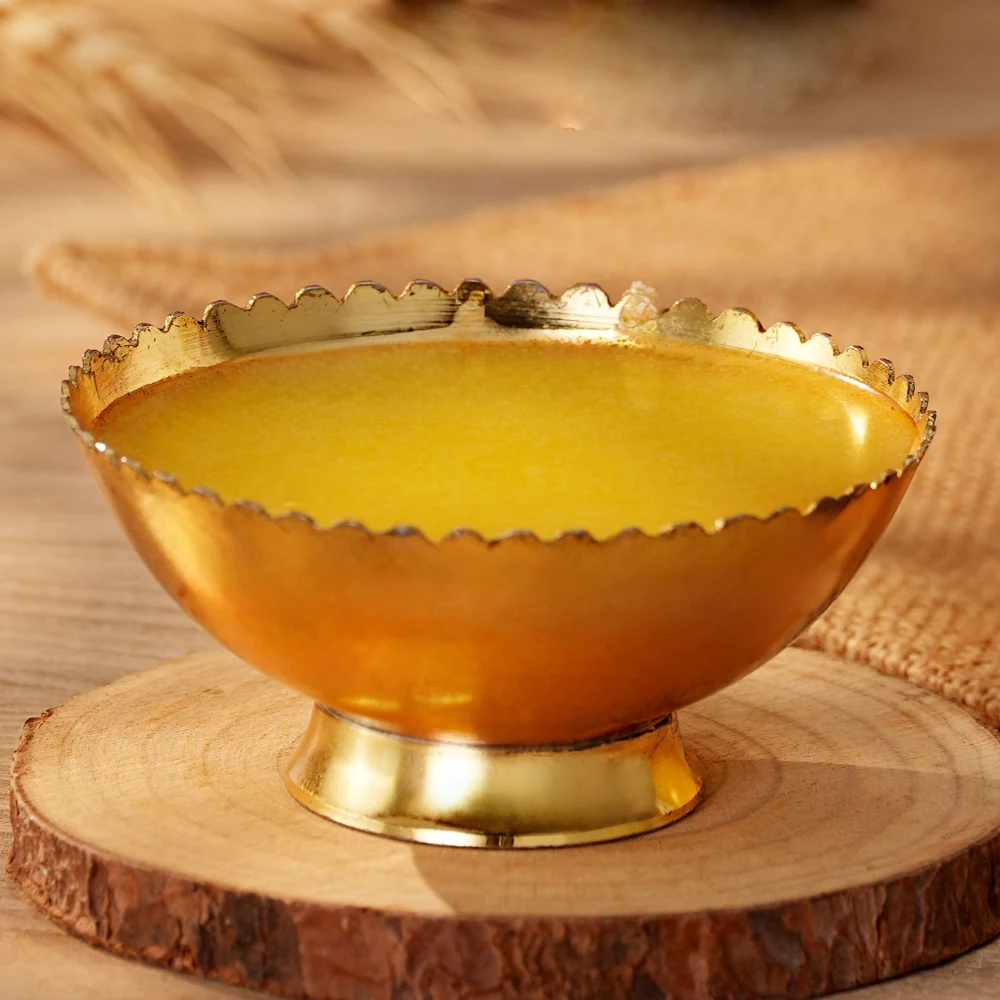
Ghee suits the jobs where heat is high or where you want the fat itself to carry flavour: a tadka over dal, frying onions, roasting vegetables, making parathas, finishing rice or khichdi. Because the milk solids are gone, it does not blacken the way butter does in a hot pan.
Butter is better where you want its water and its softness. It spreads on bread, and it is the usual choice in baking, where the water in butter makes steam and helps the bake rise. Some recipes can take either, and many cooks keep both.
Can you swap one for the other?
Often, but not always one for one. Replacing butter with ghee in a recipe removes the water that butter would have added, so baked goods may need a small adjustment. Replacing ghee with butter in a hot pan is likely to leave you with burnt milk solids. Where the fat is simply there to cook with, the swap is easy.
Cultured ghee: one more difference
Not all ghee is made the same way. Much of it is made from cream or butter directly. Cultured ghee starts earlier. The cream is fermented with a bacterial culture first, and only then is it churned and clarified. That is closer to how ghee was traditionally made in Indian homes, where milk was set into curd before it was churned.
AB704 is a cultured ghee, made from Gir cow milk and set with a proprietary Direct Vat Set culture. If you would like to know how that step works, our founding story explains what cultured ghee is and how it is made, and the AB704 product page lists every fact printed on the label.
How to choose between jars of ghee
Whichever you choose to cook with, read the pack. A plain ghee should list one ingredient, carry an FSSAI licence number, name who made it, and print a batch number and dates. We cover each of those checks in our guide to how to read a ghee label.
What this article does not compare
We have not compared ghee and butter on health. Both are dairy fats, both are foods, and neither of us is in a position to give medical or dietary advice. If you have a question about your own diet, a doctor or a dietitian is the right person to ask.
Frequently asked questions
Is ghee just clarified butter?
Ghee is a kind of clarified butter. It is usually cooked longer, which browns the milk solids slightly and gives it a nutty flavour. In India it is often made from curd or cultured cream that has been turned into butter first, rather than from fresh butter alone.
Does ghee have a higher smoke point than butter?
Yes, in practice. The milk solids in butter burn at a lower temperature, and ghee has had them removed, so it tolerates higher heat before it smokes. The exact temperature varies from one product to another.
Can I use ghee instead of butter for baking?
You can in many recipes, though not always one for one. Butter contains water, which adds moisture and steam to a bake. Ghee does not, so a recipe may need a small adjustment.
Does ghee need to be refrigerated like butter?
Ghee is usually stored in a cool, dry cupboard, and the AB704 label says exactly that. Butter is usually refrigerated because it still contains water and milk solids. Our guide to storing ghee at home has the details.
What is the difference between cultured ghee and regular ghee?
Cultured ghee is made from cream that was fermented with a bacterial culture before it was clarified. Regular ghee is often made by clarifying fresh cream or butter directly. The AB704 label describes its cultured ghee as crafted for enhanced aroma and consistency.