
00Our story
A new company carrying forward a very old idea.
Six short chapters on how Snehprabha Foods Co. began, and why our first product is named after a bacterial culture.
Chapter 01
Why Snehprabha exists
Almost every household in India keeps ghee. Very few know anything about the ghee they keep: where the milk came from, how it was made, whether anyone checked it. The category runs almost entirely on trust in a label.
We started Snehprabha Foods Co. in April 2026 with a narrow idea: begin with one very good ghee, and be unusually specific about it. Not more adjectives. More documents.
We exist to make it easy to know exactly what you are buying.
Chapter 02
Why indigenous dairy
India has spent decades optimising milk for yield. That was necessary, and it worked. What it also did was push indigenous breeds to the margins of the dairy economy, and with them a particular kind of milk.
Indigenous dairy is not automatically better. It is different, and it is worth keeping. Building a product around it is one way of making sure it stays commercially alive rather than merely sentimental.
Chapter 03
Why Gir cow milk
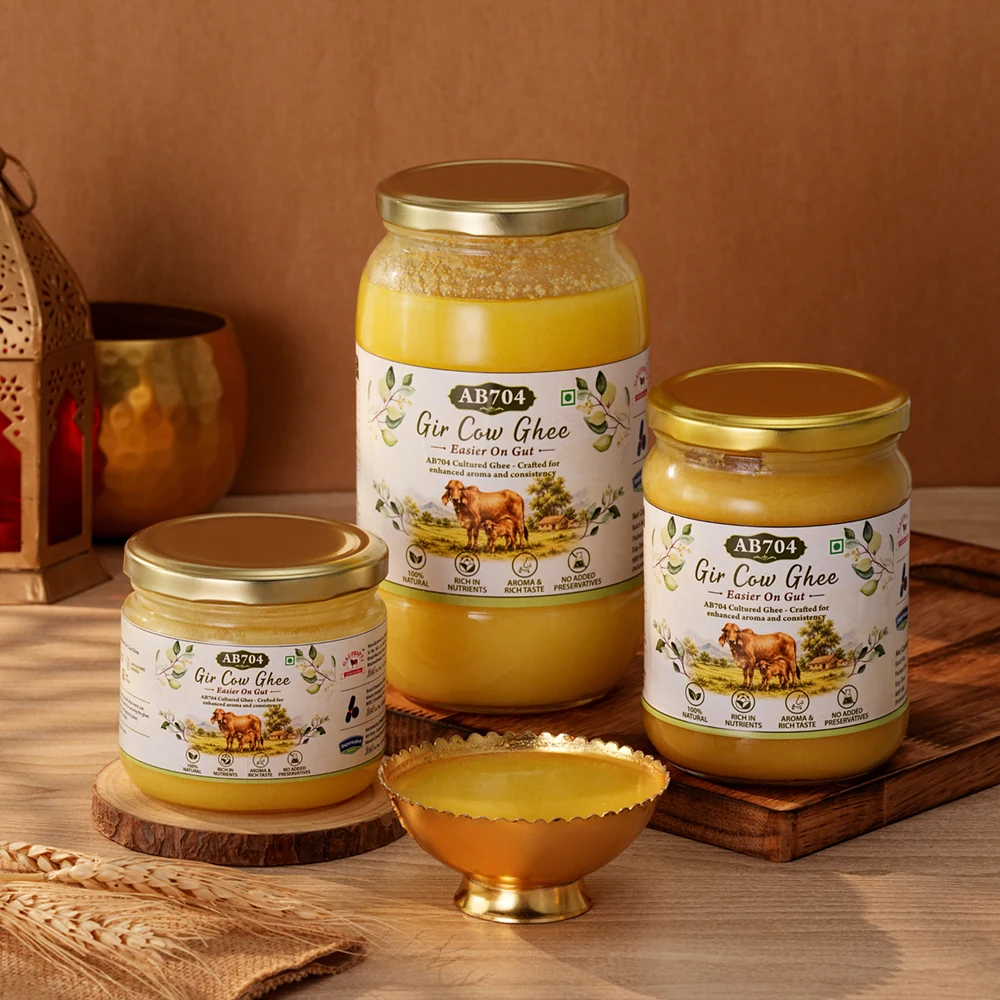
The Gir is one of India’s oldest recognised cattle breeds, from the Saurashtra region of Gujarat. Its milk carries the A2 beta-casein variant.
That is a compositional fact, and we will leave it there. There is a large, noisy market built on claiming A2 milk is medically superior. The honest position is that A2 is a real difference in the milk, that the science on what it means for people is still being argued, and that we would rather sell you good ghee than a health argument.
Chapter 04
Why culture matters
Traditional Indian ghee was rarely made from fresh cream. It came from cultured dairy: milk soured, set, churned, and only then clarified. That fermentation step is not decoration. It is where a great deal of the aroma comes from.
Industrial ghee mostly skips it, because skipping it is faster. AB704 does not. The cream is set with a Direct Vat Set culture, which is concentrated freeze-dried lactic acid bacteria added straight to the vat, and left to do its work before any heat is applied.
The oldest step in the process is the one modern production tends to remove.
Chapter 05
Why we began with AB704
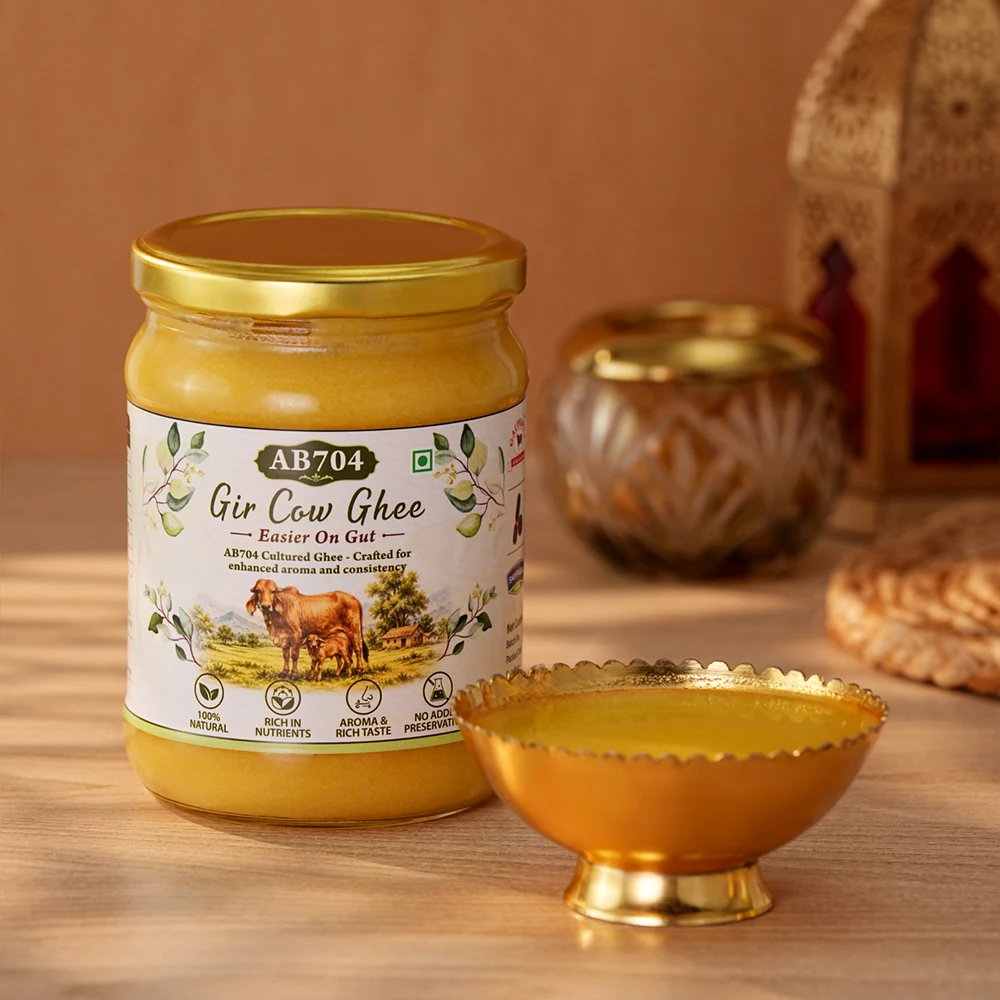
AB704 is the name of the culture before it is the name of the product. It is a proprietary DVS culture developed by ABsource Biologics, a company that makes cultures for dairy producers in India and abroad.
Naming the ghee after the culture was a choice, and not an obvious one. It puts the most specific, least marketable thing about the product on the front of the jar, and it means we have to keep explaining how it is actually made.
Chapter 06
Why transparency matters
We are a new company. We have no decades of goodwill to trade on, and inventing some would be both easy and dishonest. What we can do instead is show our work: 65 laboratory test entries, an FSSAI licence number you can verify yourself, and the name of everyone in the chain from the milk to the jar.
Some of those test results say nothing conclusive. We publish those too. A page that only shows the flattering numbers is a brochure, not evidence.
Show people what you test, including the parts that prove nothing.
Where we are going
To be the world's most trusted name in authentic, scientifically-cultured indigenous dairy, reviving the wisdom of India's A2 Gir cow heritage through modern bioscience, so that families from Ahmedabad to Amsterdam can make better health their everyday standard, not a rare privilege.