
Ghee guides4 min read
Gir Cattle: The Indian Breed Behind Gir Cow Ghee
Where Gir cattle come from, how to recognise the breed, why it matters to Indian dairy, and what Gir cow ghee on a label does and does not tell you.
- Written by
- Snehprabha Foods Co.
- Published
- Last updated
- Length
- 961 words

Gir cow ghee is named after an animal. The Gir is one of India’s oldest recognised cattle breeds, and when a ghee label carries its name it is telling you which cows the milk came from. This article explains where the breed comes from, how to recognise it, why indigenous breeds matter to Indian dairy, and what the name on a label does and does not mean.
Where Gir cattle come from
The breed takes its name from the Gir hills and forest in the Saurashtra region of Gujarat. The same area is known to most people as the last home of the Asiatic lion, in Gir National Park. The cattle have been kept by herding communities in this part of western India for a very long time.
Gir belongs to the family of humped Indian cattle, called zebu, that are native to the subcontinent. In India these are often called desi or indigenous breeds, to set them apart from the European breeds and crossbreeds that dominate commercial dairy in many countries.
How to recognise a Gir cow
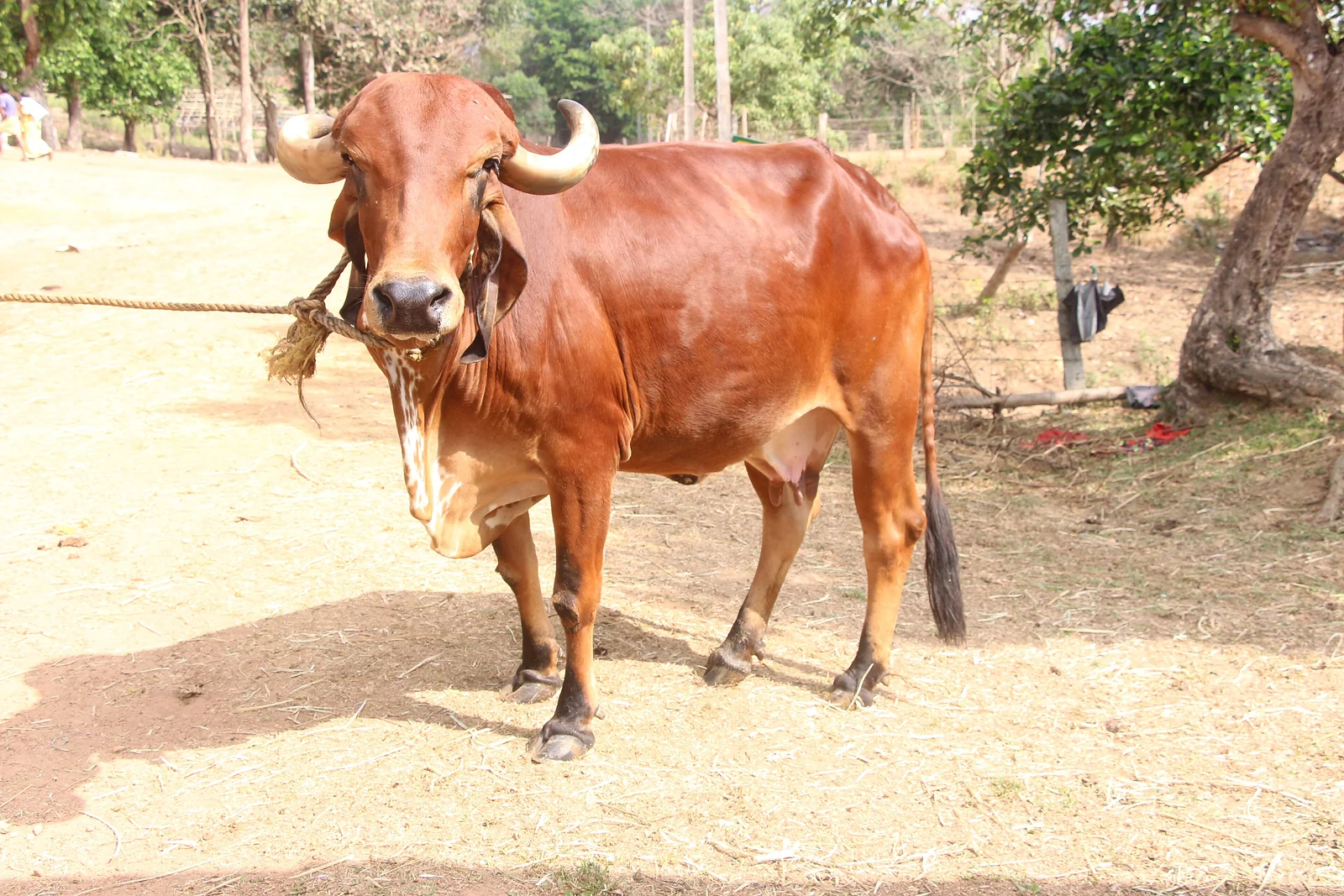
Gir cattle are easy to pick out once you know the features. The forehead is rounded and prominent, the ears are long and hang down, often curling at the tips, and there is a pronounced hump over the shoulders. The coat varies from solid red to spotted patches of red or yellowish brown on a lighter base.
Why the breed matters to Indian dairy
Much of India’s commercial milk now comes from buffaloes and from crossbred cows, bred for volume. Indigenous breeds such as Gir were adapted over centuries to Indian conditions, and they are known for coping well with heat. Keeping them in production is one way of keeping that diversity alive.
It also explains why a brand that uses milk from a named indigenous breed is making a deliberate choice. It costs more to organise, and the milk is a smaller part of the market. We cover our own thinking in Our Story.
Gir cattle outside India
The breed has travelled. Gir cattle were taken to Brazil in the early twentieth century, where the breed is spelled Gyr and is widely used in tropical dairy farming, often crossed with other breeds. That history is part of why Gir is among the best known of the Indian breeds around the world.
What Gir cow ghee on a label tells you
A breed name on a ghee label is a statement by the brand about the milk it used. It describes where the milk comes from. It is not a measurement, and it is not a promise about taste or about health.
That is why it is worth asking how the brand backs the statement up: which dairy supplies the milk, who makes the ghee, and whether the licences and test results are available to read. We make no medical claim on the strength of the breed, and we do not say that Gir cow ghee is healthier than ghee from other cattle.
Questions to ask a brand about its breed claim
You do not need a laboratory to test a breed claim, but you can ask for the paperwork around it. Four questions are enough to tell a brand that has thought about its milk from one that has only put a name on the jar.
- Which dairy or farms does the milk come from, and where are they?
- Who manufactures the ghee, and is their FSSAI licence number printed on the pack?
- Is the culture or method used to make the ghee named, rather than described only as traditional?
- Does the brand publish test results for the product, and will it tell you what they cover and what they do not?
A brand that can answer these in plain words is easier to trust than one that leans on the breed name alone.
How AB704 uses Gir cow milk
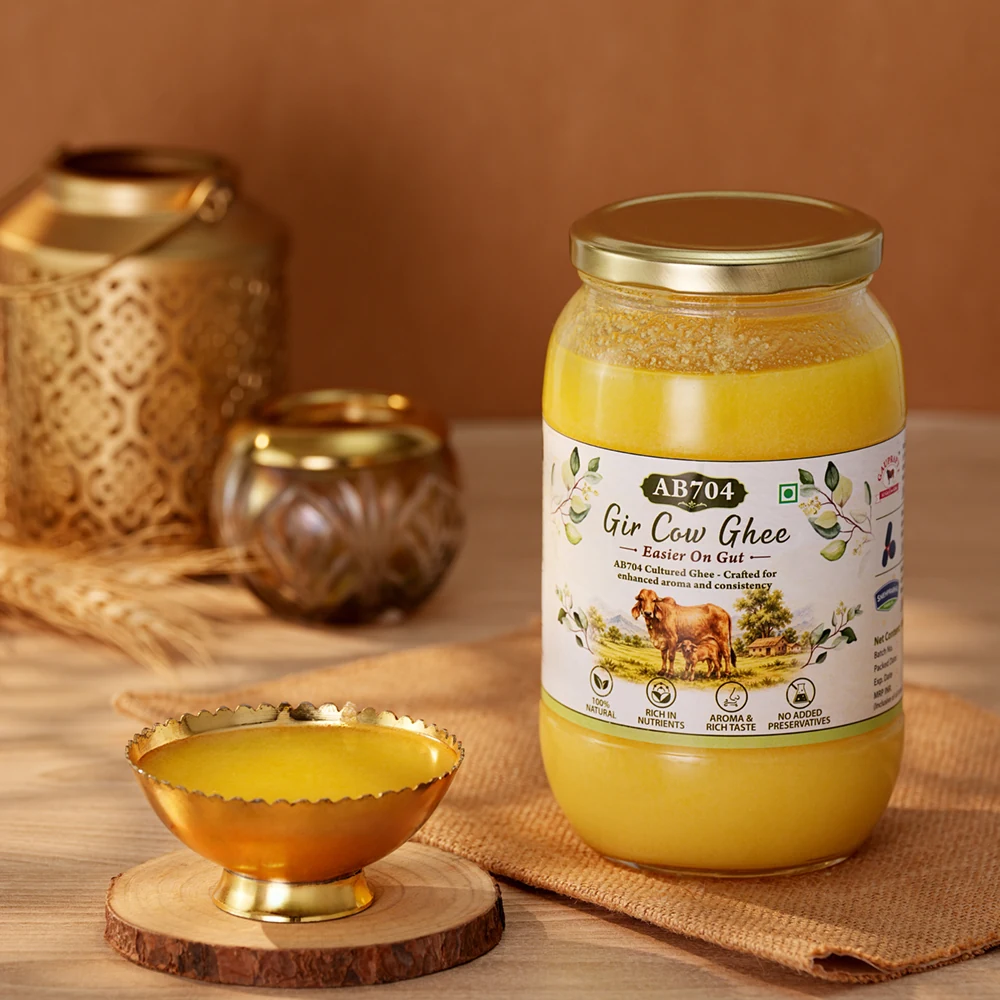
AB704 is made from Gir cow milk. The cream is cultured with a Direct Vat Set culture before it is clarified into ghee, and the breed is named on the front of every jar. The jar also prints the manufacturer, the brand owner and the marketer, each with an FSSAI licence number.
You can read the facts on the AB704 product page, see every laboratory result on the science page, and learn what to look for on any ghee pack in our guide to how to read a ghee label.
Frequently asked questions
Is Gir a desi cow?
Yes. Gir is an indigenous Indian breed, from the Saurashtra region of Gujarat. Desi is the everyday word for the native breeds of India.
Where does the Gir breed come from?
The breed is named after the Gir hills and forest in the Saurashtra region of Gujarat in western India, the same area that is home to Gir National Park.
What does Gir cow ghee mean?
It means the ghee is made from the milk of Gir cattle. It describes where the milk comes from. It does not by itself tell you how the ghee was made or how it tastes, so check the rest of the label.
Is Gir cow ghee better than other ghee?
We do not say that. A breed name describes the source of the milk. Choose a ghee by how it is made, what is on the label, and what evidence the brand shares.
What is cultured Gir cow ghee?
It is ghee made from Gir cow milk in which the cream is fermented with a culture before it is clarified. AB704 is cultured with a proprietary Direct Vat Set culture developed by ABsource Biologics.