
Ghee guides5 min read
How to Store Ghee at Home: Jars, Spoons and Shelf Life
How to store ghee at home: the right jar, a dry spoon, where to keep it, whether to refrigerate it, and why ghee changes colour or turns grainy.
- Written by
- Snehprabha Foods Co.
- Published
- Last updated
- Length
- 1,145 words
Ghee is one of the easier things in a kitchen to look after. It is almost entirely fat, with the water and most of the milk solids already removed, which is why it has been kept in Indian homes for generations without special equipment. It still pays to know the few habits that keep a jar tasting the way it did on the first day.
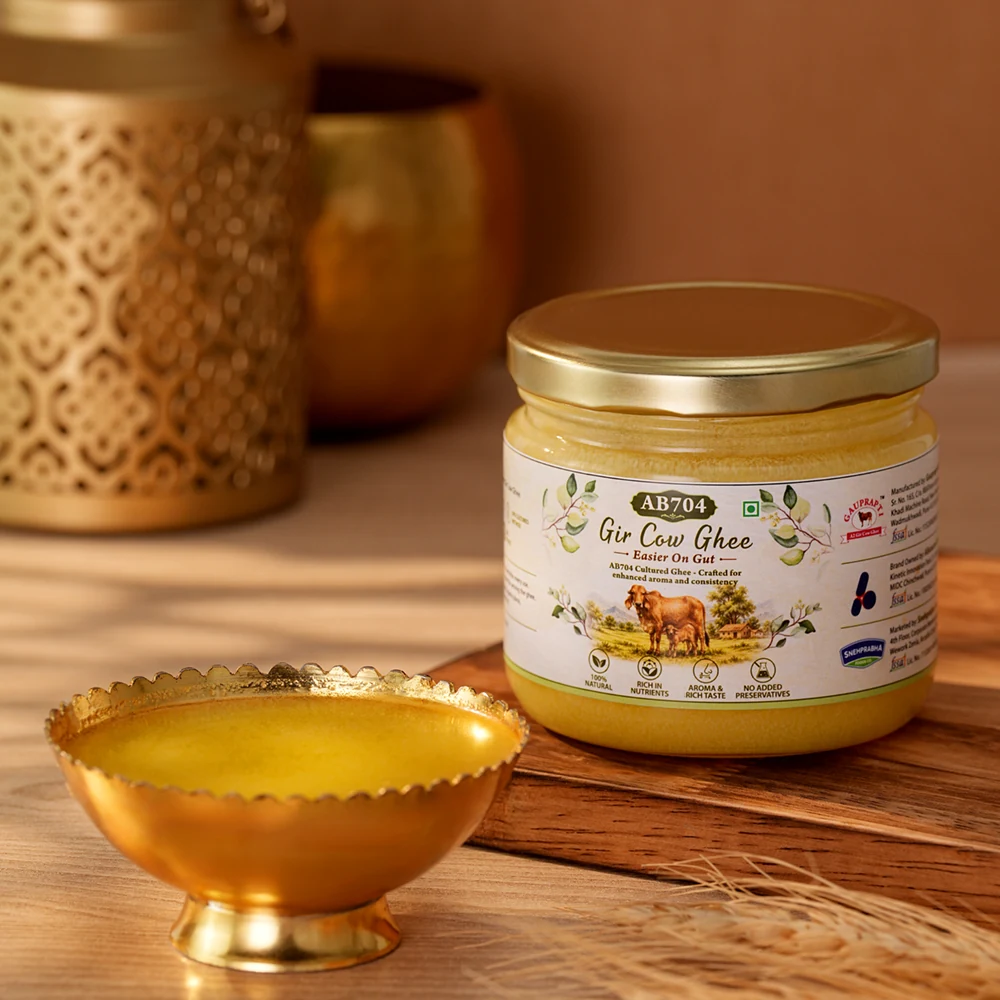
The three rules printed on the AB704 label
The back of an AB704 jar gives three storage instructions. They are short, and each has a reason.
- 01Keep the lid tightly closed after every use. Open air brings moisture and kitchen smells into the jar.
- 02Use a clean and dry spoon. Water is the thing that does the most harm to a jar of ghee, and a wet spoon is the easiest way for it to get in.
- 03Store in a cool, dry and hygienic place, away from direct sunlight. Heat and light speed up changes in the fat that you can taste as an off flavour.
Everything else in this guide is a way of following those three rules in a real kitchen. If you want to know what else a jar should tell you before you buy it, our guide to reading a ghee label covers it.
Which jar to keep ghee in
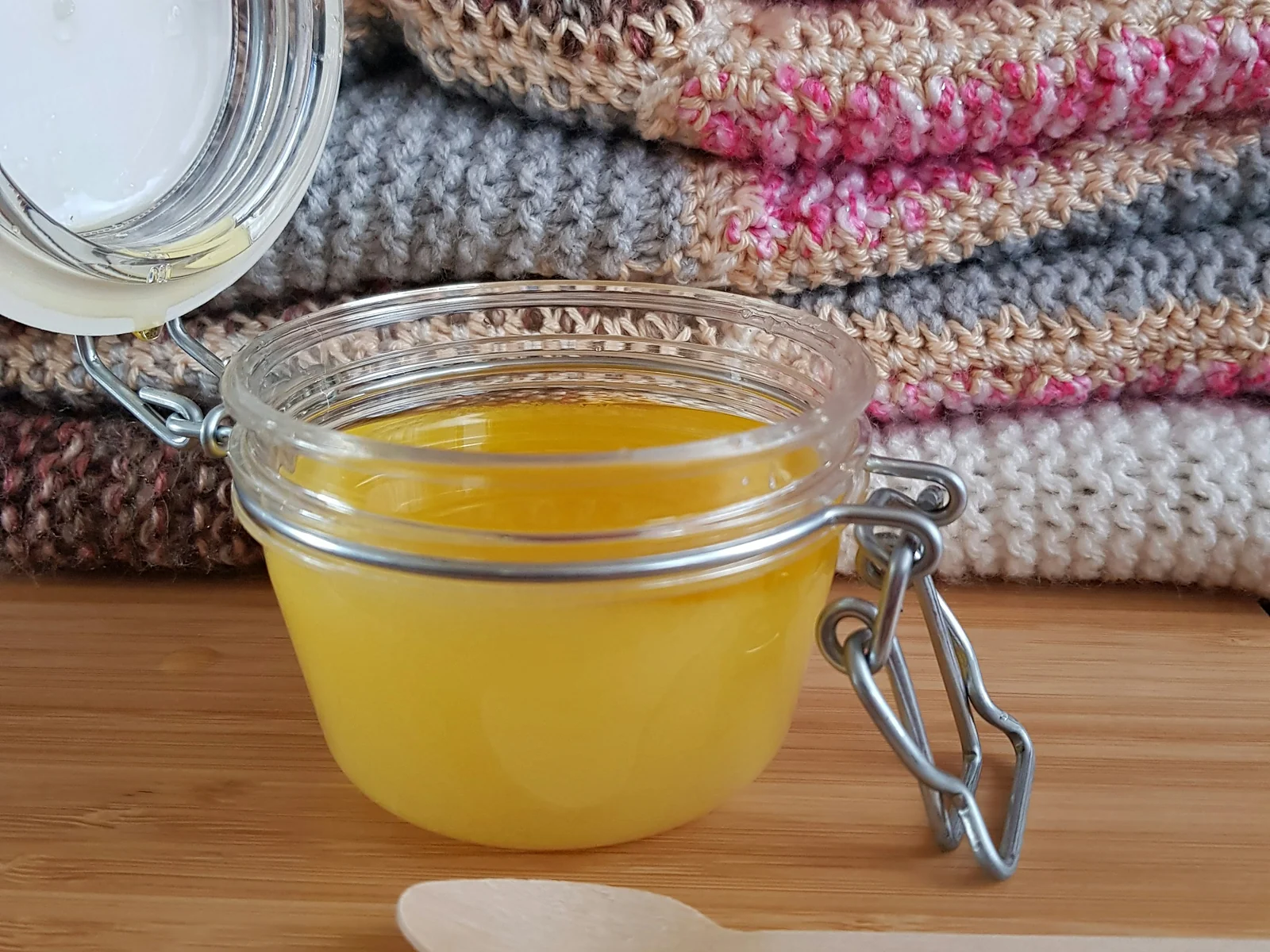
Glass and stainless steel are the practical choices. Both are easy to wash, neither holds on to the smell of whatever was in them before, and a tight lid fits well on either. A wide mouth makes it easy to scoop, and a narrow one keeps less air in contact with the ghee.
Whatever you choose, wash it and dry it fully before it is filled. A jar that looks dry but still carries a film of water is the same problem as a wet spoon.
Where in the kitchen to keep it
The best spot is a closed cupboard or a shelf away from the stove, the window and the dishwasher. Steam from cooking is moisture, a sunny window is heat and light, and a cupboard right above the hob gets both. If you cook with ghee every day, keep a small amount in a separate container near the stove and the main jar somewhere cooler.
Do you need to refrigerate ghee?
Not as a rule. Ghee is not stored like butter, and the AB704 label asks for a cool, dry place rather than a refrigerator. Some people choose to refrigerate it in very hot or humid weather, and that is a choice, not a requirement. The jar will set firm in the cold and be harder to scoop.
If you do refrigerate, take out only what you need with a dry spoon and put the jar back promptly, because a cold jar left on the counter collects condensation on its surface. When in doubt, follow the storage advice printed on your own jar, since it was written for that product.
Why ghee changes colour and texture
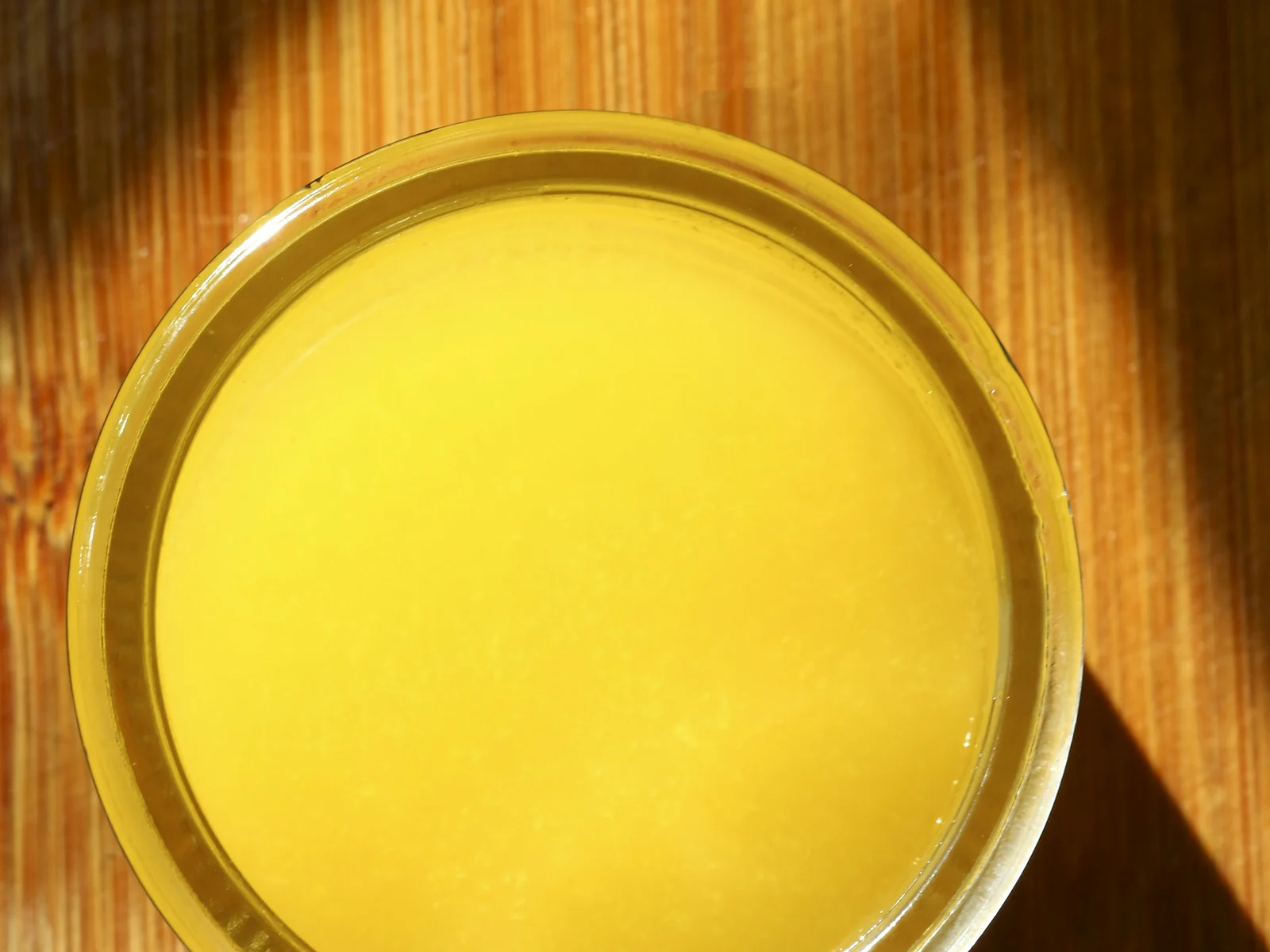
Ghee is a natural product, and it does not look the same all year. It can be liquid and clear on a warm day, soft and creamy in mild weather, and firm in a cold kitchen. Its colour can run from pale to deep gold depending on the batch and the season.
The grainy texture that surprises people is a natural effect of how fat sets. When ghee cools slowly, fat crystals form, and they feel like small grains. It is not a fault. Warming the jar gently, for example by standing it in a bowl of warm water with the lid on, brings the ghee back to a smooth texture.
How to tell when ghee has gone off
Smell it. Fresh ghee smells rich and buttery. If the smell is sour, sharp or like old oil, do not use it. Also throw it away if you see mould, if water has gathered in the jar, or if the taste is bitter. When you are unsure, it is better to let it go.
What the best before date means for your jar
The best before date on the pack was set on the assumption that the jar is stored the way its label says. We do not give one number of months for all ghee, because how long it keeps depends on how it was made, how it was packed and how it is looked after at home. Use the date on your own jar, and finish one jar before opening another so you always know how old the ghee in front of you is.
A short storage checklist
- Keep the lid closed whenever the spoon is not in the jar.
- Use a clean, dry spoon every time, and never dip a wet one.
- Choose a glass or steel jar and dry it fully before filling.
- Store it in a cool, dry cupboard, away from the stove and sunlight.
- Warm it gently if it sets grainy. Do not throw it out for that.
- Discard it if it smells sour, shows mould or has water in it.
For the rest of what is printed on a pack, see our guide to how to read a ghee label.
Frequently asked questions
Does ghee need to be refrigerated?
Not as a general rule. AB704 is labelled for storage in a cool, dry place away from direct sunlight. Refrigeration is a personal choice in very hot or humid weather. It makes ghee set firm, so take out only what you need with a dry spoon.
Why has my ghee turned grainy?
Grains are fat crystals that form when ghee cools slowly. It is a natural change in texture and not a sign of spoilage. Warm the jar gently and the ghee returns to a smooth texture.
Can I top up an old jar with new ghee?
It is better not to. Finish one jar before opening the next, so you always know how old the ghee is and so moisture or smells from the old jar do not carry over into the new ghee.
How long does ghee last?
Check the best before date printed on your jar. The date assumes the jar is stored as its label says, with the lid closed, a dry spoon and a cool, dry place. We do not quote a single number of months, because it depends on the product and on how it is kept.
What is the safest way to take ghee out of the jar?
With a clean and dry spoon, every time. A wet spoon is the most common way for water to get into a jar.